
Last updated November 14, 2026
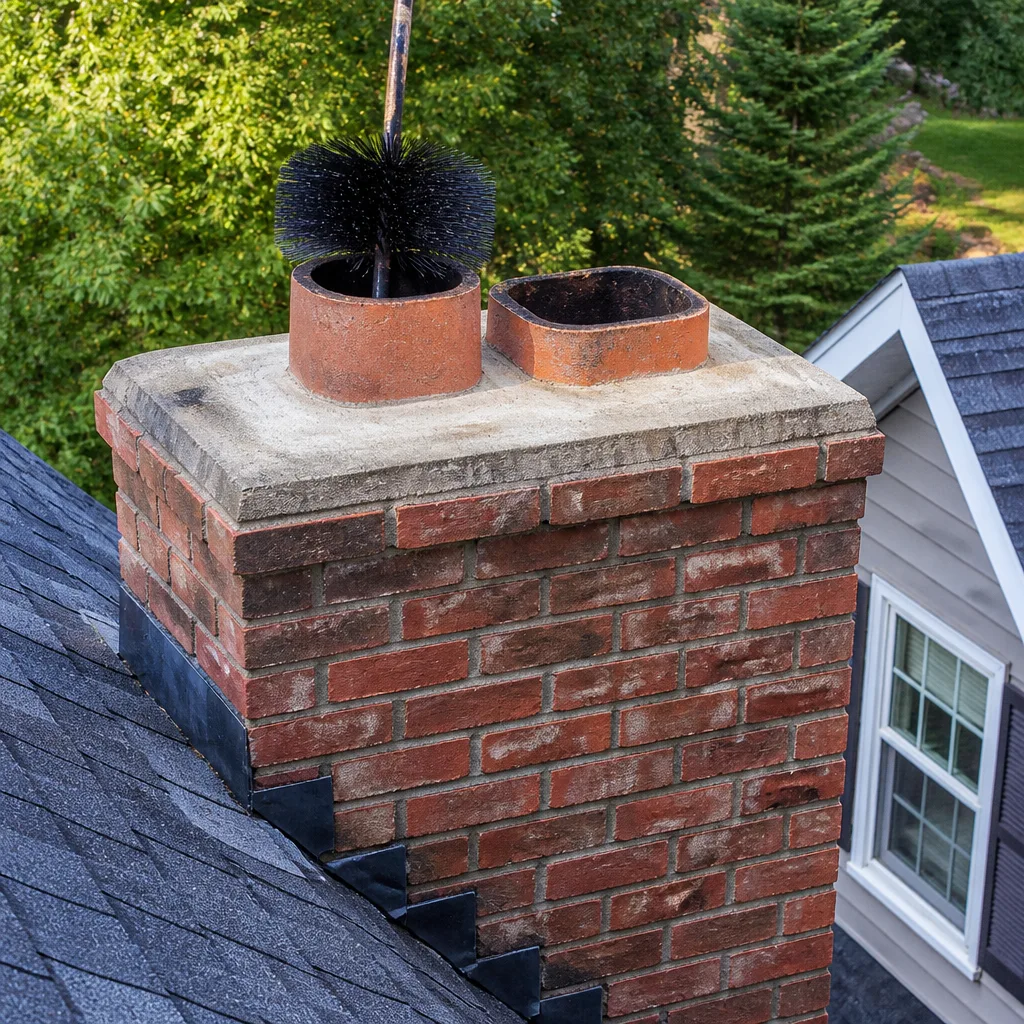 Sweep & inspection
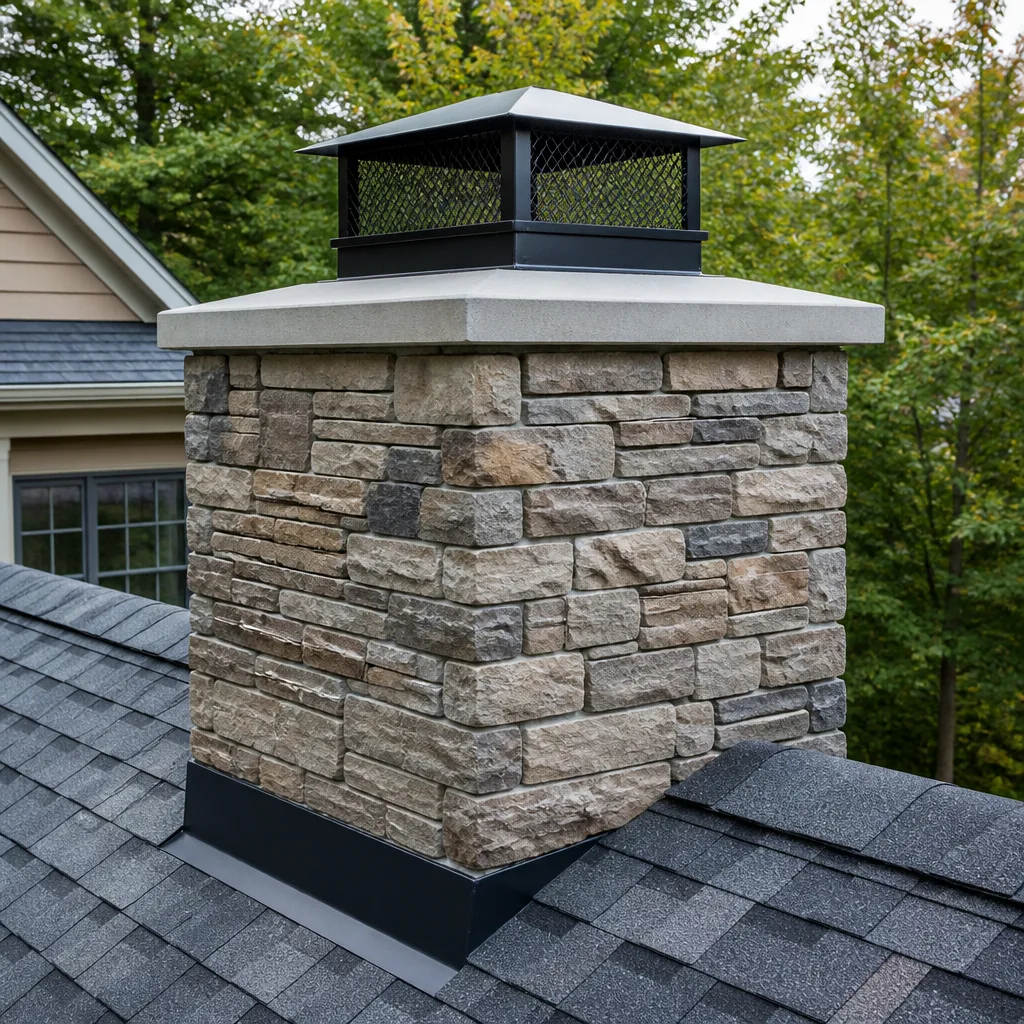 Caps & crowns
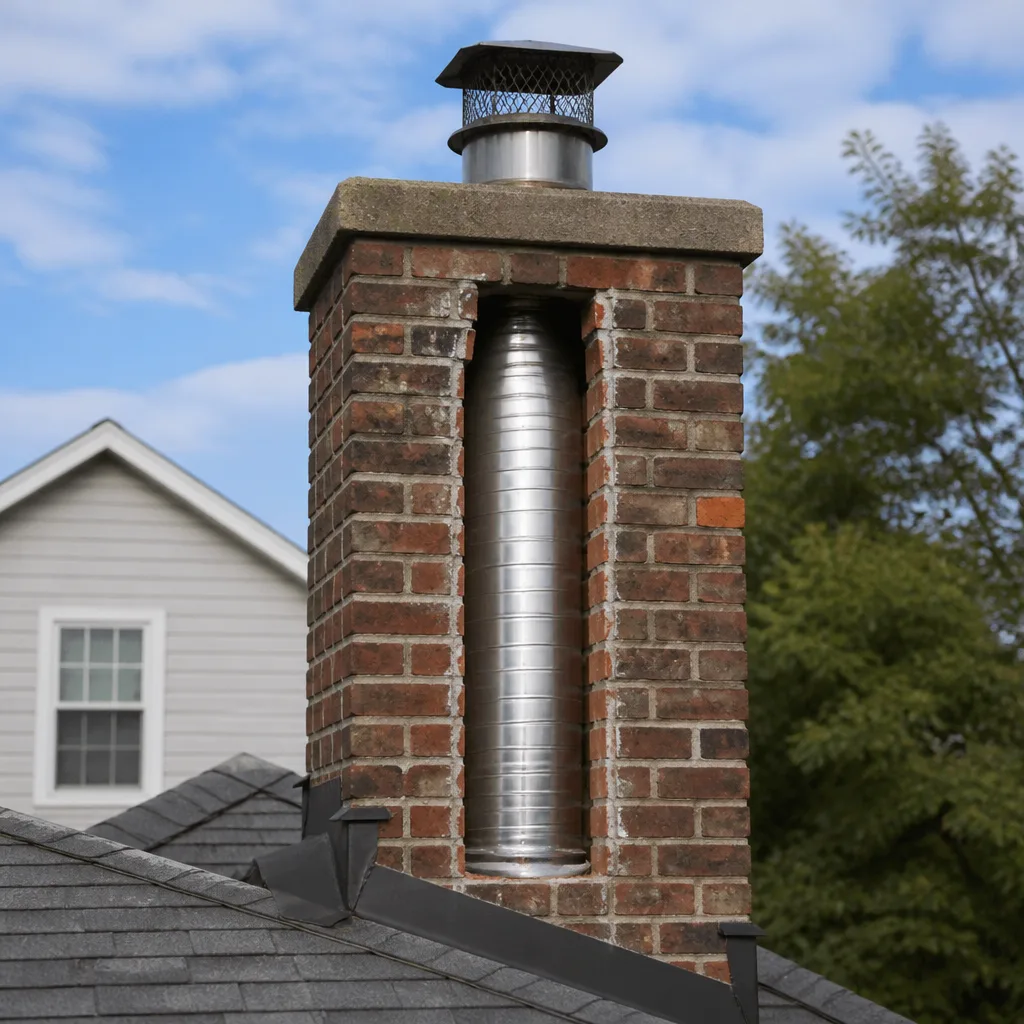 Flue relining
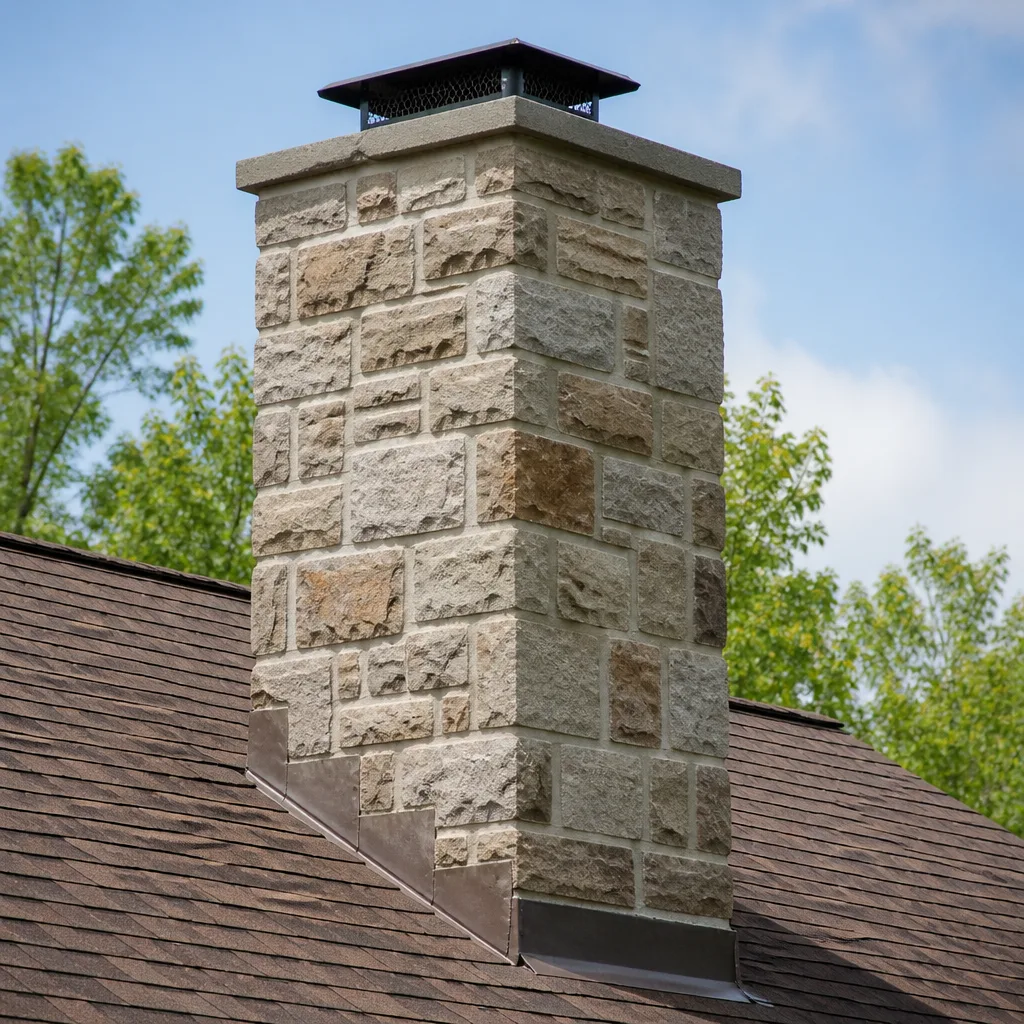 Masonry repair
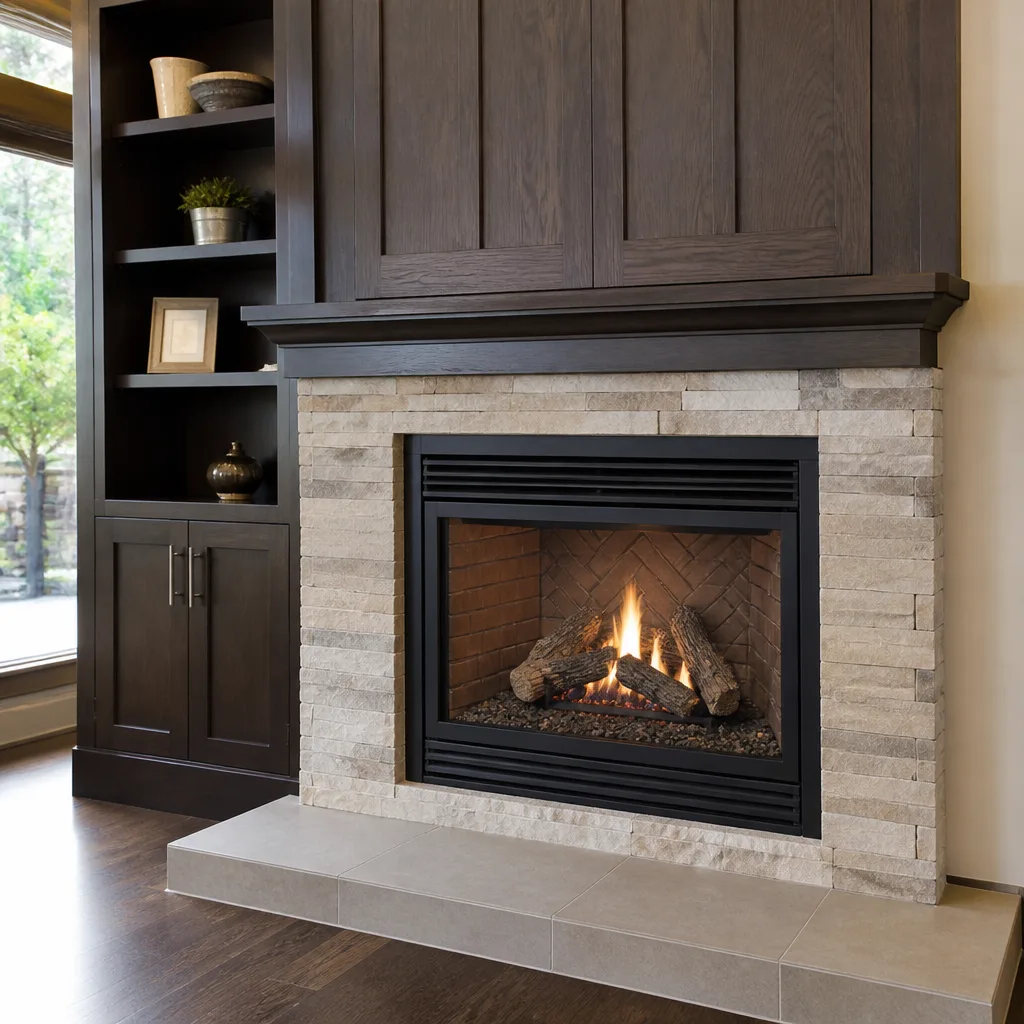 Gas fireplace service
Level 1 sweep and inspection to the NFPA 211 annual standard - flue, crown, cap, and flashing checked and photographed
Chimney sweep logs do not sweep chimneys. They loosen some creosote - which then falls where a brush and vacuum still have to collect it.
DIY vs Professional Chimney Cleaning: The Garland Homeowner’s Decision Guide
You can buy a chimney brush kit for about $60 and run it down your flue well enough to feel like the job is done. That’s the honest part. But a brush only touches what it can reach, and it tells you nothing about what’s behind the tile, above the smoke chamber, or inside a liner you’ll never see from the roof. The real question in Garland isn’t whether you’re capable of pushing a brush. It’s whether cleaning without an inspection leaves you with a false sense of security. This guide covers what a brush actually cleans, when DIY is genuinely reasonable, and what a professional should hand you before you pay a dime.
Quick Answer
For a lightly used fireplace with a recent professional baseline inspection, DIY brushing is reasonable housekeeping. For anything else, especially an older Garland home or a wood stove you burn hard through mild winters, professional cleaning plus a camera inspection is the safer call. The difference isn’t the brush stroke. It’s the assessment a brush can’t give you.
Styles & brands we work with
- Sweep & inspection
- Caps & crowns
- Flue relining
- Masonry repair
- Gas fireplace service
Table of Contents
- What a Brush Actually Cleans (And What It Misses)
- When DIY Chimney Cleaning Is Genuinely Reasonable
- Why DIY Cleaning Can Mask Stage 2 Creosote
- The Insurance Question Nobody Wants to Ask
- What a Professional Should Leave Behind
- How Garland’s Climate Shapes Chimney Wear
- The Tools a Real Sweep Uses That You Don’t Own
- Common Mistakes to Avoid
What a Brush Actually Cleans (And What It Misses)
A chimney brush is a scraping tool. It removes loose soot and the crusty creosote that clings to the flue walls along the straight run of the pipe. On a simple, straight flue, a properly sized brush does that job well. That’s the part people picture when they think about chimney cleaning, and it’s the part a homeowner can honestly handle on a lightly used flue.
The problem is everything a straight flue run isn’t.
Where the brush stops reaching
- The smoke chamber. This is the sloped area above the damper and below the flue. It’s corbelled, jagged, and hard to reach. Creosote glazes it in a way a round brush can’t scrub clean. It’s also where a lot of flue fires start.
- Connection points. Where the stove pipe meets the thimble, where the insert connects to the liner, where the flue tile joins the crown. These junctions collect creosote at the seams and are the first places a brush glides past.
- Lateral offsets. If your flue has a jog or an offset around a roofline, the brush follows the pipe but scrapes lightly on the outer curve and misses the inner shelf where creosote settles.
- Behind and above the damper. The damper housing and the shelf above it trap debris that a brush stroke passes over. It builds up across seasons.
None of this means DIY cleaning is useless. It means the brush cleans the surface and leaves the structure unread. In our experience across Garland homes, that gap between “clean flue” and “safe system” is exactly where the real risk lives. If you want the fuller picture of how a professional sweep addresses those areas, the chimney sweep page walks through what a sweep actually covers beyond the brush run.
When DIY Chimney Cleaning Is Genuinely Reasonable
We’re not going to tell you that every homeowner needs a professional every year. That’s not honest, and it doesn’t match what we see. There are specific scenarios where a homeowner with the right tools and a careful approach can handle the brushing themselves without creating risk.
The conditions that make DIY defensible
- You have a recent professional baseline. If a qualified sweep inspected your system last season and confirmed the liner is sound, the smoke chamber is intact, and there were no structural issues, you know what you’re working with. That baseline is the single most important condition.
- The fireplace is lightly used. A gas insert or a fireplace you run a handful of times through the winter produces far less creosote than a wood stove burning daily. Lighter use means less buildup and a lower margin for error.
- The flue is accessible and straight. A straight run with a clean roofline access and no offsets is the simplest case. If your flue jogs or you can’t safely reach the top, DIY stops being reasonable.
- You’re clearing surface soot, not diagnosing a problem. If you suspect a liner crack, a creosote glaze, or a draft problem, a brush won’t tell you anything useful and may not be safe to run. That’s a different kind of call.
- You have the right brush for the flue size and material. A brush that’s too stiff for a clay tile liner can crack it. A brush that’s too small doesn’t touch the walls. Matching the brush to the flue is not optional.
If any of those conditions don’t apply, especially the baseline inspection, DIY brushing becomes guesswork. And guesswork on a flue is not where you want to be. A brush protects the surface. It doesn’t protect the structure.
Why DIY Cleaning Can Mask Stage 2 Creosote
Creosote builds in stages, and the middle stage is the one that fools people. Stage 2 creosote is a glazed, hardened deposit that forms when the flue runs cool and the smoke condenses on the walls. It looks like a shiny dark coating. Sometimes it’s patchy. Sometimes it covers the whole flue.
Here’s the problem with a brush and Stage 2 creosote: a standard brush can knock off the loose, fluffy Stage 1 soot around it and leave the glazed Stage 2 layer intact, or it can break off a few flakes and make the flue look scrubbed. The surface reads clean to a homeowner peering up from the firebox. The glazed layer is still there, and glazed creosote is the fuel for a flue fire.
The same thing happens in the smoke chamber. You brush the flue, the chamber is out of the brush’s reach, and the glazed creosote on the corbelled surface stays put. From the hearth, everything looks fine.
What reveals Stage 2 buildup
- A camera inspection of the flue interior, not just a visual from the firebox.
- A sweep who scrapes and feels the flue walls, not just runs a brush through.
- Reading the smoke chamber and the damper shelf directly.
- Checking the seams and connection points where glaze forms first.
This is why we don’t treat cleaning as a standalone service. When a flue has heavy glaze, a brush isn’t enough. It needs proper removal, and sometimes it needs a resurfacing process like HeatShield to bring a pitted or cracked liner back to a safe condition. A DIY brush pass can’t arrive at either conclusion on its own. It just makes the flue look better than it is.
The Insurance Question Nobody Wants to Ask
If a flue fire damages your Garland home and your insurer asks for the maintenance history, you need documentation. That’s not a scare tactic, it’s how claims work. Carriers increasingly look at whether the homeowner can show the system was professionally maintained and inspected. A DIY cleaning leaves no record. There’s no written finding, no photo, no statement of system condition. There’s just your word that you brushed it.
A professional sweep leaves a paper trail. That trail isn’t a guarantee against anything going wrong, but it’s evidence that you did the maintenance you were supposed to do. When a claim is being reviewed, the difference between “I cleaned it myself” and “here’s the inspection report from the sweep who cleaned it” matters.
We’re careful not to say we can guarantee how any insurer will handle a claim. That’s not ours to decide. What we can say is that professional documentation is the thing a claims adjuster can actually use. If you want to understand how professional cleaning and inspection support that record, the Dayspring Chimney Sweep service overview covers the reporting side along with the cleaning itself.
The takeaway is simple. Insurance and code aside, documentation is one more reason a DIY-cleaned flue is a flue with no history. Call (855) 974-6812 for a free estimate and we’ll walk you through what a documented sweep looks like.
What a Professional Should Leave Behind
A professional cleaning isn’t just a brush run you paid for. The value is in what you hold afterward: evidence that tells you what condition your system is in and what, if anything, needs attention next. If a sweep leaves and you don’t have any of the following, you paid for a brush stroke, not a service.
What a real sweep should hand you
- A written statement of system condition. A clear, plain-language summary of what was found in the flue, smoke chamber, damper, and liner. “Cleaned and in good condition” is a complete statement only if it’s true, and it should be supported by what the sweep actually saw.
- Photos or camera footage. A photo of a sound liner or a cracked one is worth more than any verbal summary. You should be able to see what the sweep saw.
- A clear call on what needs repair and what can wait. If mortar needs repointing, a crown needs sealing, or a liner is failing, that should be stated directly. If something can safely wait a season, the sweep should say so.
- An honest distinction between cosmetic and structural. Not every stain or flake is a problem. A good sweep tells you which is which.
This is the standard we hold ourselves to in Garland. We carry the parts, not just the brushes, which means when something needs repair, we can handle it rather than sending you to a subcontractor. That’s the reason we stock DuraFlex liner systems and are HeatShield-qualified for resurfacing: when a flue needs more than cleaning, the sweep who spotted the problem should be the one who fixes it. Call (855) 974-6812 for a free estimate and we’ll show you what that report looks like.
How Garland’s Climate Shapes Chimney Wear
Garland winters are mild, and that affects chimney wear in a way that catches people out. A mild winter means fires are often lit on colder evenings and let to burn slowly, or lit and allowed to smolder. Cool, slow, low-oxygen burns produce more creosote than hot, active fires. So a Garland homeowner who burns a dozen fires through the winter can build up creosote faster than someone in a colder climate who burns hot every day.
The other factor is the summer. Chimneys in Garland sit through long, humid stretches when the system isn’t used at all. Moisture gets into masonry, mortar joints, and the tops of flues, and that gradual moisture exposure is where a lot of the wear shows up by the time fall arrives.
What this means for your DIY decision
- More slow-burning fires means more creosote per season. A flue can look clean but carry a heavier glaze than expected.
- Humid summers mean masonry and mortar checks matter as much as flue cleaning. A brush can’t evaluate that.
- The shoulder seasons, when the system hasn’t run in months, are the time to look at the flue and the crown before the first fire of the year.
For homeowners across Garland neighborhoods, from older blocks near the downtown square to newer construction on the city’s outer edges, the pattern is similar. The firebox gets attention, the rest of the system doesn’t. If this is your first fall in a Garland home, especially an older one, the Garland service area page is the place to start and then book a look at the system before you light up. Call (855) 974-6812 for a free estimate.
The Tools a Real Sweep Uses That You Don’t Own
A $60 brush kit is not the same toolset a professional brings. The brush is a small part of it. The difference is the equipment that lets a sweep see and assess, not just scrape. When you compare DIY and professional, you’re comparing a brush and a flashlight to an inspection system.
The gear that changes the answer
- A flue camera. The single biggest difference. It lets the sweep see the full interior of the liner, the offset sections, the crown, and the smoke chamber. You can’t replicate this from the hearth with a mirror.
- Specialty brushes and rods for the shape of the flue. Round, square, oval, flexible, and rotary heads sized to the flue material and dimensions. One generic brush handles one size and one shape.
- A HEPA vacuum with a sealed system. Professional cleaning contains soot instead of releasing it into the home. A DIY brush pass in a Garland living room is a dust event.
- Scraping tools for glazed creosote. Stage 2 glazing needs more than a brush. Removing it is a different procedure.
- Resurfacing and repair materials. HeatShield for smoke chamber and flue resurfacing, DuraFlex for liner work, Gelco and Olympia Chimney components for repair and connection. These are not homeowner tools, and they’re not sold at a box store.
The point isn’t that you can’t buy a brush. The point is that the brush is a fraction of what makes a chimney sweep a sweep. The tooling and the training to interpret what the camera shows are what turn a brush run into a safety assessment.
Common Mistakes to Avoid
- Brushing without a baseline inspection. Cleaning a flue you’ve never had inspected is cleaning blind. You won’t know what the brush left behind. In Garland, that’s the most common DIY mistake we hear about.
- Ignoring the smoke chamber. It’s the area most likely to hold Stage 2 creosote and the area least likely to get cleaned. A clean flue above a glazed chamber is a false sense of security.
- Using the wrong brush for the liner material. Stiff brushes can damage clay tile. A cracked tile liner is a much bigger problem than a dirty one.
- Cleaning from the firebox and calling it done. The top of the flue and the crown don’t get touched from below. The parts a homeowner can’t see are the ones that fail.
- Cleaning a chimney you haven’t used in years and lighting it without a look. Sitting idle lets moisture and debris build up. The first fire after a long break is the one to inspect for, not the one to assume.
- Letting a DIY cleaning stand in for a repair. If a liner is cracked or a crown is failing, the brush doesn’t fix it. Cleaning around a problem is not the same as fixing it.
- Not keeping a record. A cleaning you can’t document is a cleaning that can’t support a claim. Take photos, write down dates, and keep the notes.
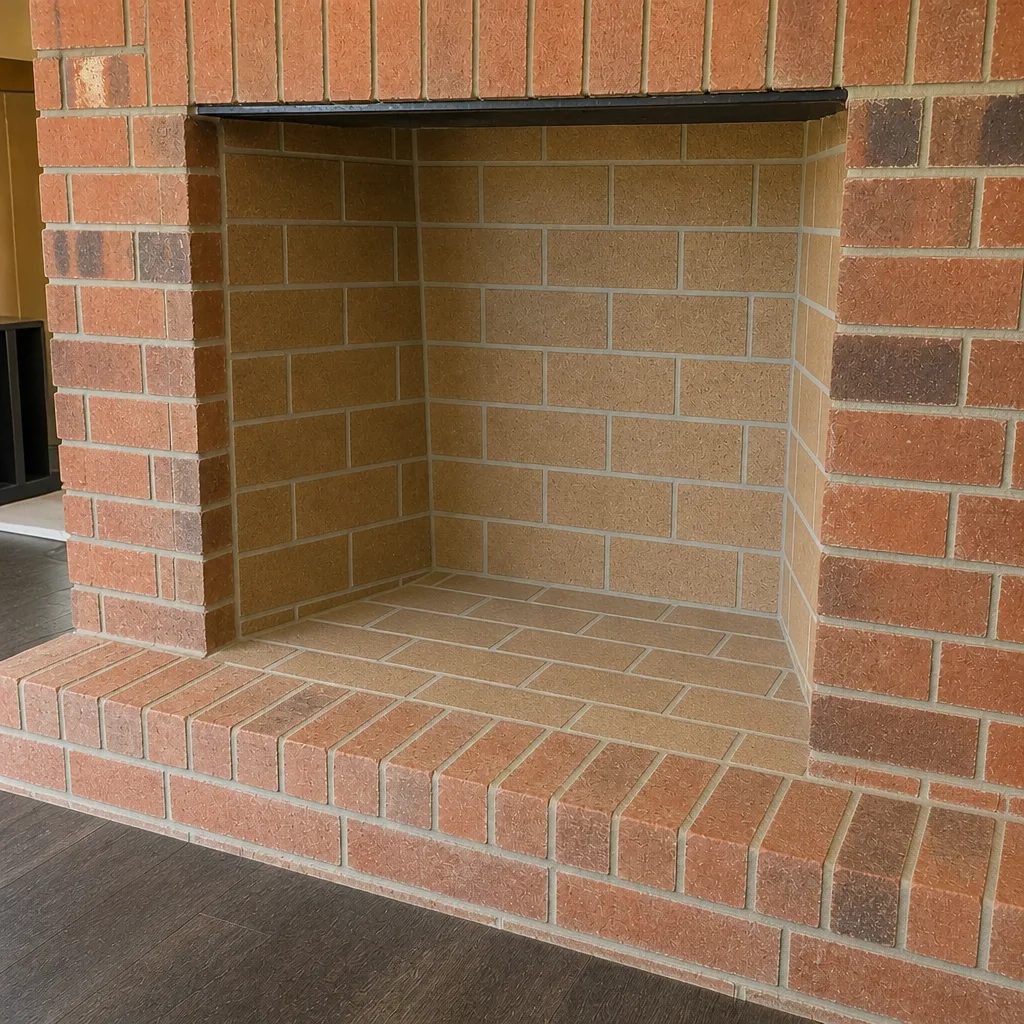
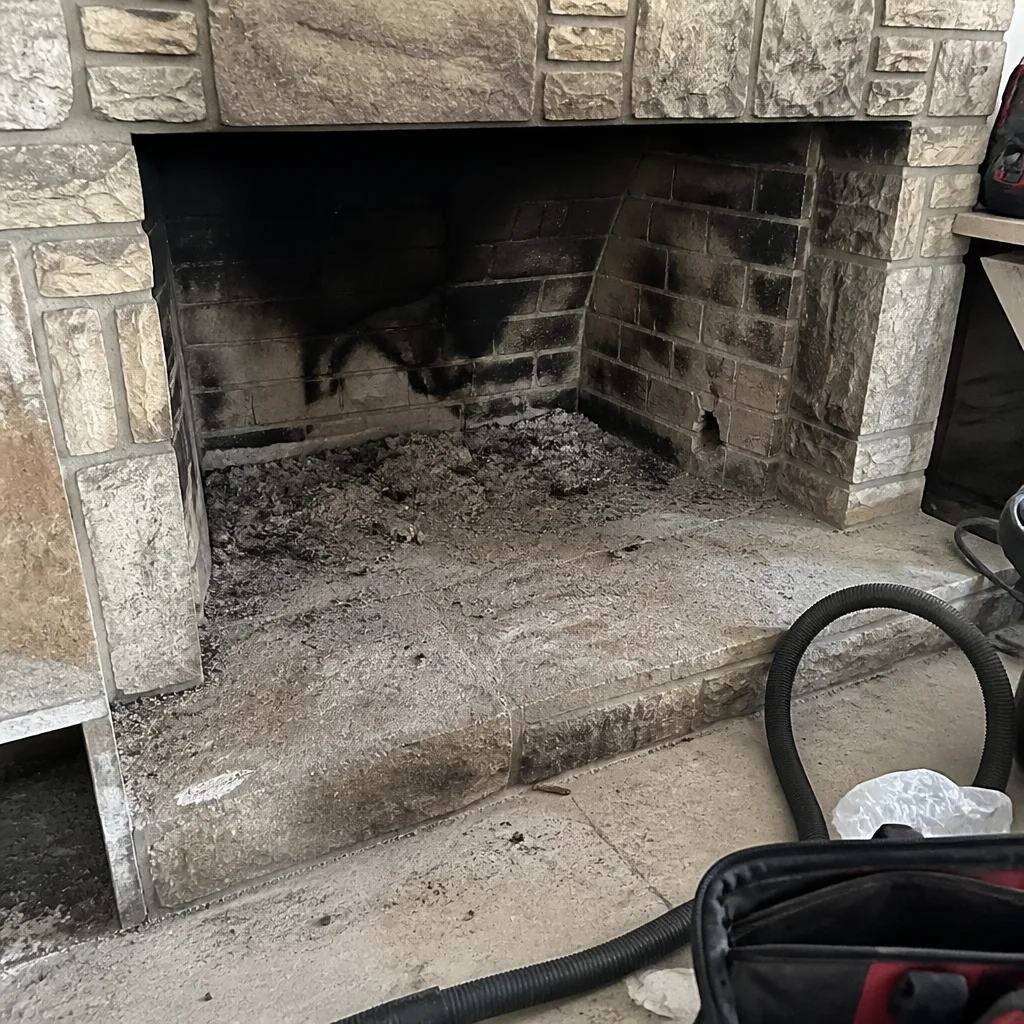
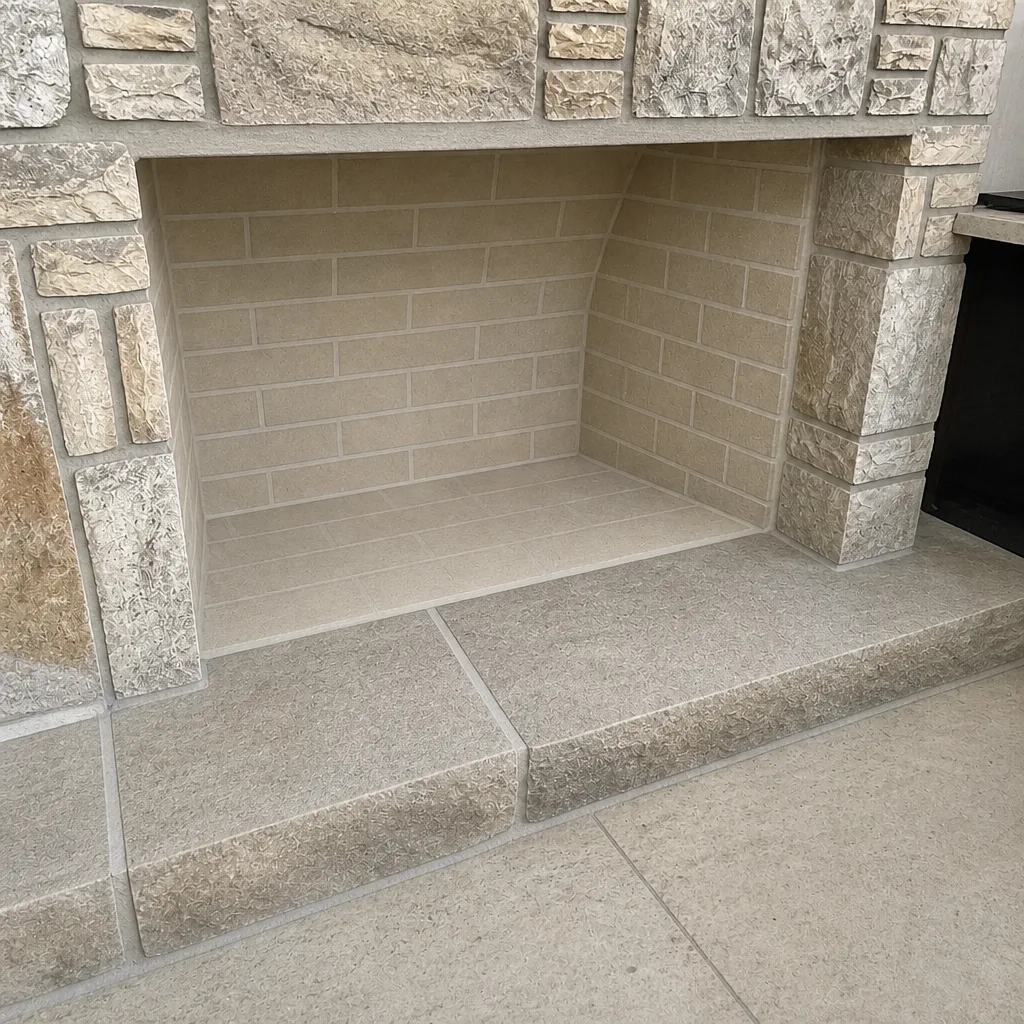
See the difference
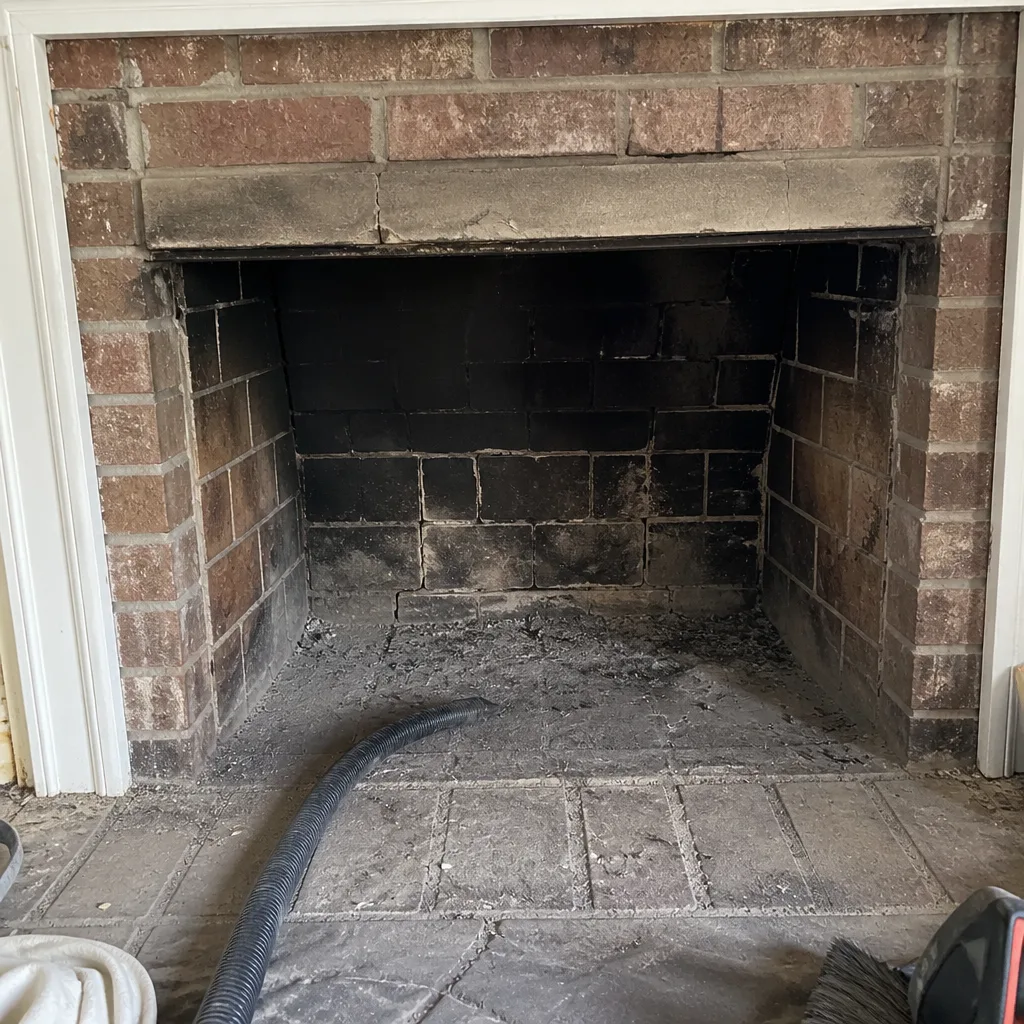 Before
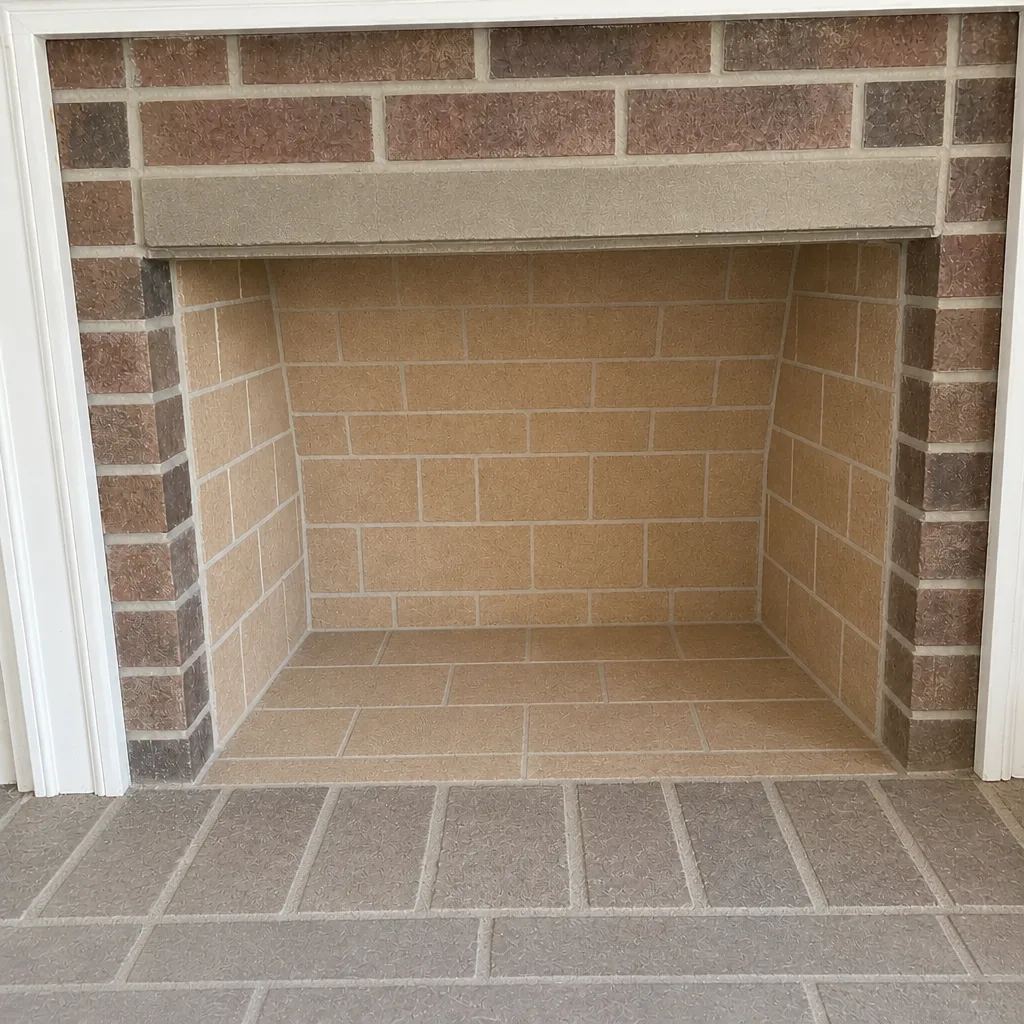 After
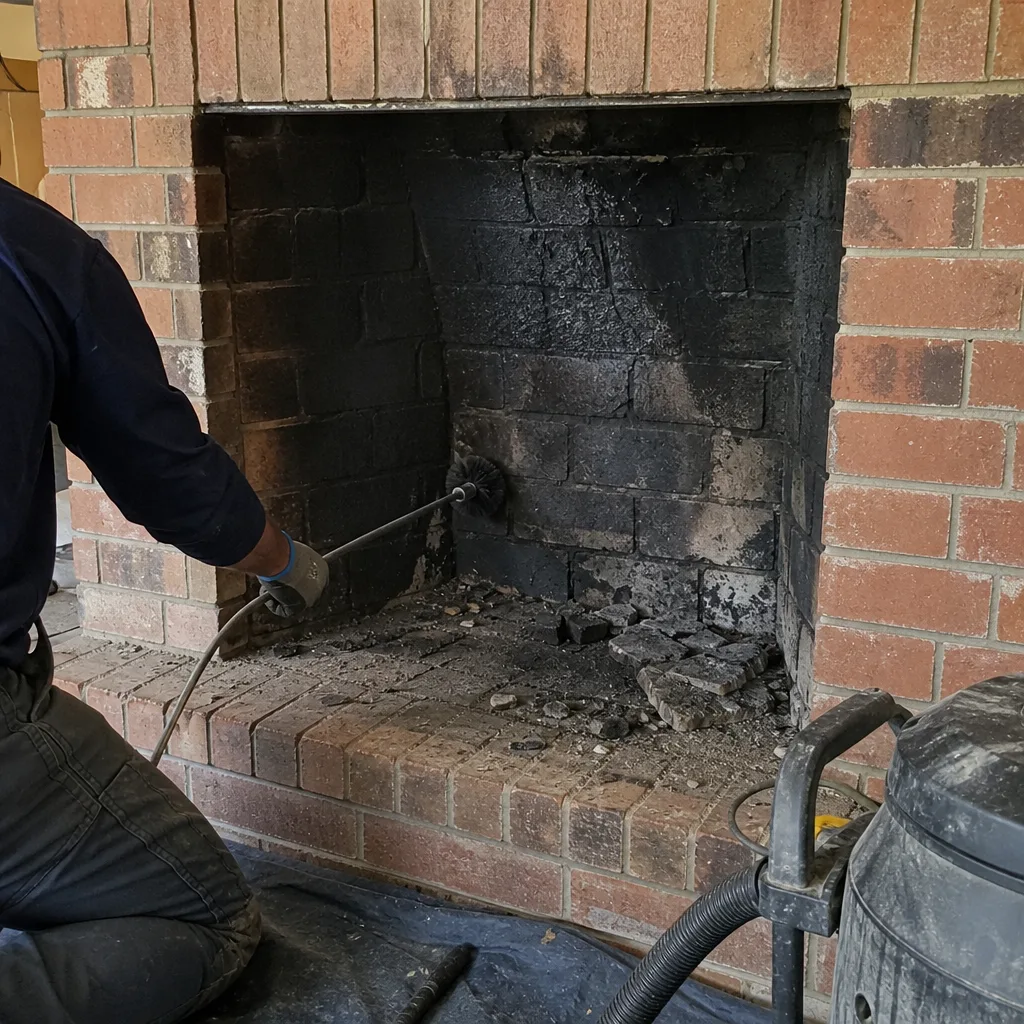 Before
 After
 Before
 After
When to Call a Professional
Some situations don’t leave room for DIY. Call a professional sweep when you’ve just bought an older Garland home and have no maintenance history, when your fireplace burns slowly or smolders and produces heavy creosote, when you’ve noticed a glaze or a stain you can’t identify, or when you’ve never had the liner or smoke chamber inspected. A wood stove used as a primary heat source also warrants professional eyes every season, because the creosote load is higher than a decorative fireplace’s. The same goes for any flue with an offset or a hard-to-reach connection.
Dayspring Chimney Sweep offers free estimates in Garland, and we’d rather tell you your system is fine than sell you work you don’t need. Call (855) 974-6812. We answer 24/7. Fast dispatch from 7am to 7pm, Sunday through Friday.
Frequently Asked Questions
Not always, but the brush only cleans the surface. A professional cleaning includes a camera inspection of the flue, smoke chamber, and liner, which is where the actual condition of the system gets assessed. If you’ve had a recent professional baseline and your fireplace is lightly used, DIY brushing between professional visits is reasonable. If you’ve never had the system inspected, brushing alone leaves the biggest questions unanswered. Call (855) 974-6812 for a free estimate and we’ll tell you which situation you’re in.
For a fireplace used regularly, once a year, before the burning season, is the standard. Garland’s mild winters mean many fires are slow and smoldering, which builds creosote faster than hot, active burns, so the annual look matters here. A lightly used gas insert may go longer between cleanings, but should still get inspected. Call (855) 974-6812 for a free estimate and we’ll talk through your use pattern.
Creosote builds up and glazes, and glazed creosote is what fuels a flue fire. The flue is also where carbon monoxide from a blocked or damaged system can enter the home. Neither is guaranteed to happen, and we won’t pretend it is. But the risk grows with each season you don’t look at the system, and the fix is cheap compared with the alternative. Call (855) 974-6812 for a free estimate before you light the first fire of the season.
It can, mainly with the wrong brush on a clay tile liner or with a brush run too aggressively on a liner that’s already compromised. If a tile cracks during brushing, you’ve turned a cleaning into a repair. That’s why matching the brush to the flue matters and why a professional baseline is worth having before you brush. Call (855) 974-6812 for a free estimate if you’re unsure about your flue material.
It can, because a professional cleaning leaves documentation: a written statement of condition and photos of the flue. A DIY cleaning leaves no record. If a flue fire happens and the insurer reviews your maintenance history, the professional record is something they can use. We can’t say how any specific carrier will handle a claim, but the value of documentation is real. Call (855) 974-6812 for a free estimate and we’ll explain what our reports include.
A DIY brush kit is a one-time purchase in the tens of dollars. A professional cleaning costs more per visit, but it includes the camera inspection, the report, the photo documentation, and the ability to catch a problem a brush would miss. That’s where the money goes. The price is set per job by a written estimate, and the estimate is free. Call (855) 974-6812 for a free estimate in Garland.
One More Vent You Shouldn’t Forget
While you’re thinking about chimney safety, the dryer vent is the other venting system in most Garland homes that can carry a fire risk. Lint builds up in the duct run behind the dryer, and a clogged vent is a fire hazard in the same category as a dirty flue. Most homeowners never look at it. We handle dryer vent cleaning alongside the chimney sweep, so both hazard points are addressed in one appointment rather than requiring two vendors. If you’re already booking a sweep, it’s worth adding the dryer vent at the same time. Call (855) 974-6812 for a free estimate and we’ll quote both together.
The Bottom Line
DIY chimney cleaning isn’t reckless for every homeowner. For a lightly used fireplace with a recent professional baseline and an accessible, straight flue, brushing is reasonable housekeeping. The problem is everything a brush can’t see: the smoke chamber, the connection points, the lateral offsets, and the glazed Stage 2 creosote that reads as clean from the hearth. A professional cleaning is a different product. It’s an inspection with documentation attached, which is what matters when a problem emerges or a claim needs support. For most Garland homeowners, expecially those in older homes or burning heavy through the mild winter, the professional visit does work DIY can’t replicate. Dayspring Chimney Sweep provides chimney sweeping, dryer vent cleaning, and chimney repair, all handled in-house, with the professional-trade materials to fix what the sweep finds. If you’re weighing the call, make it a free estimate first. Call (855) 974-6812. We answer 24/7. Fast dispatch from 7am to 7pm, Sunday through Friday.
Written by the team at Dayspring Chimney Sweep, serving Garland since 2016.