
Last updated November 14, 2026
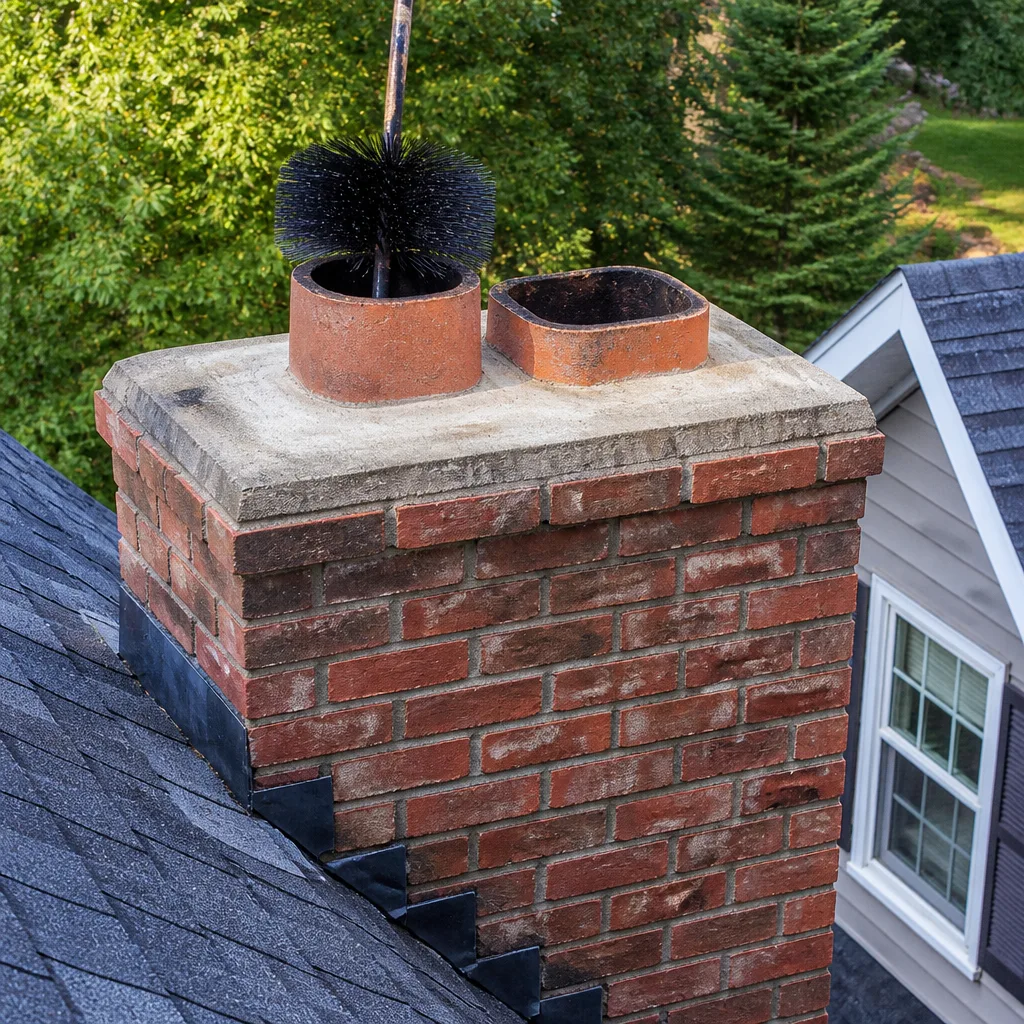 Sweep & inspection
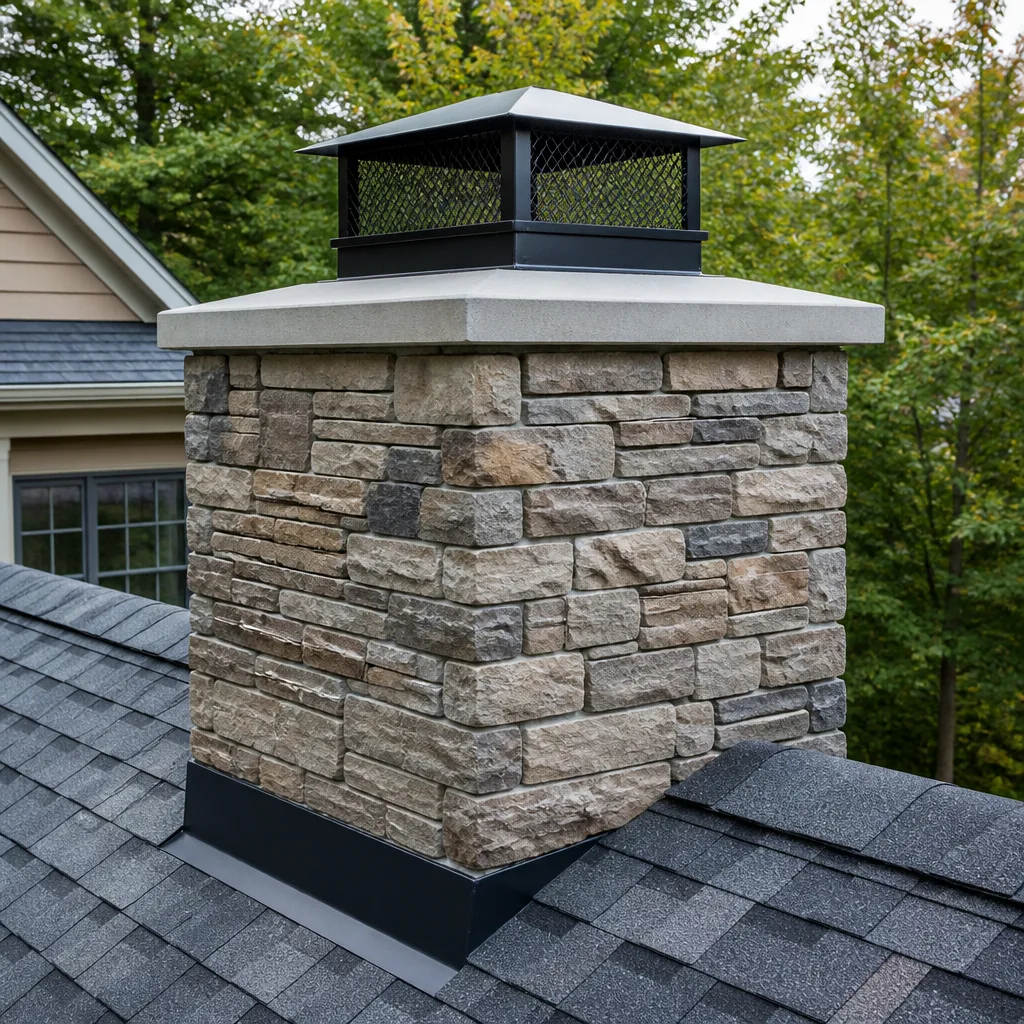 Caps & crowns
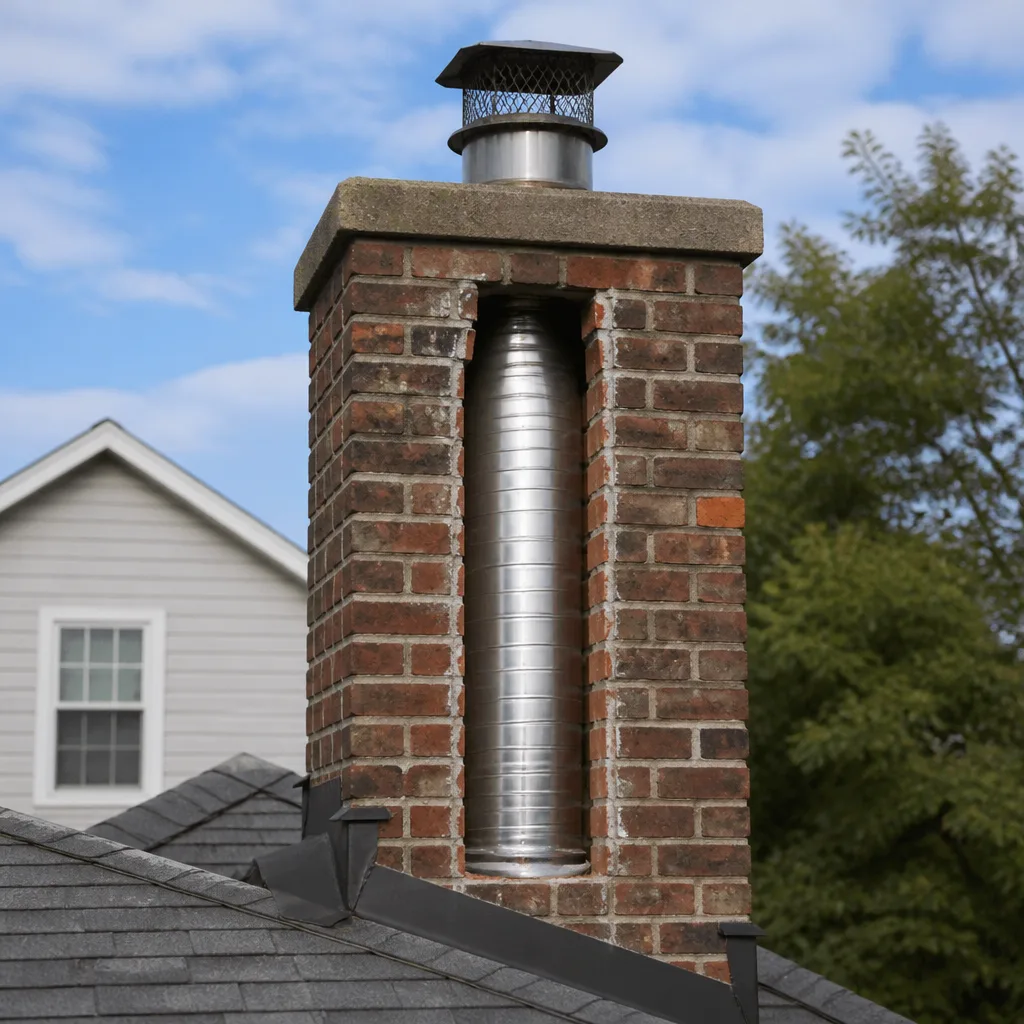 Flue relining
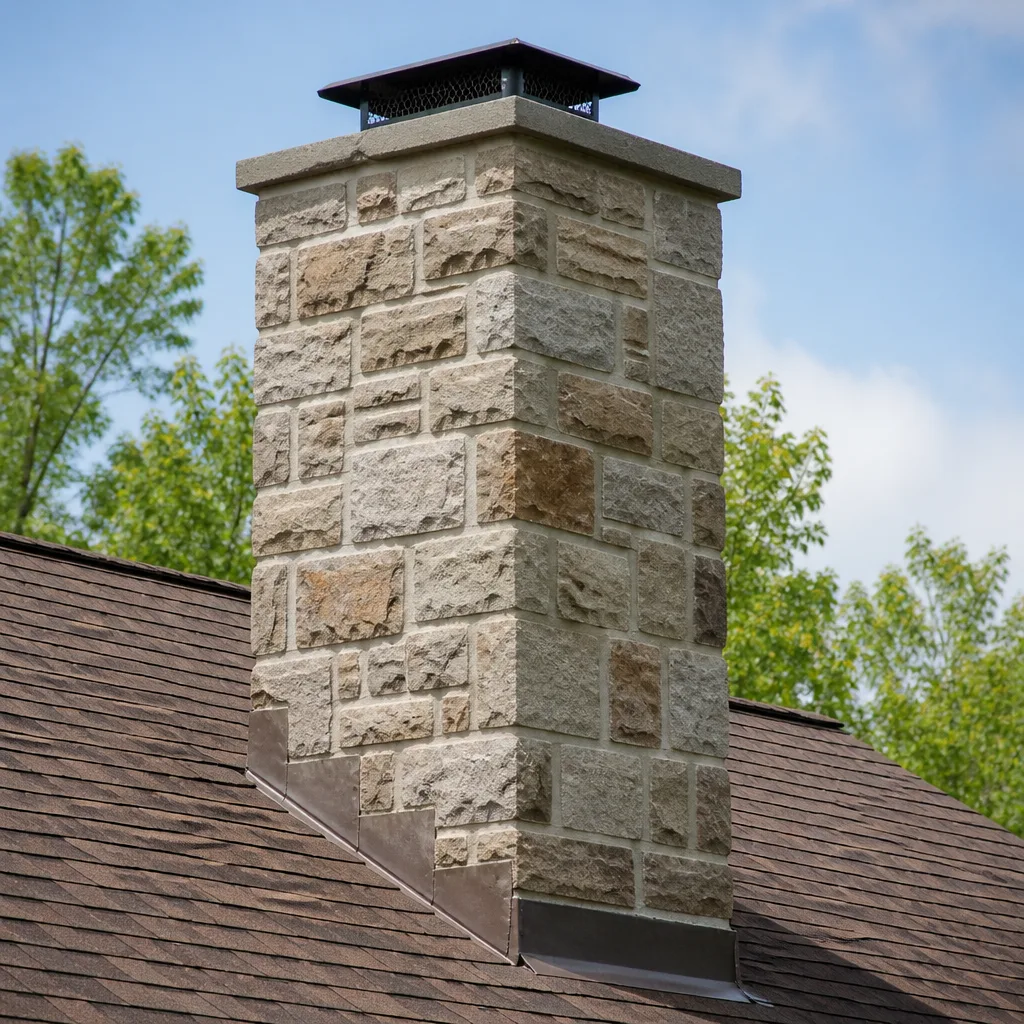 Masonry repair
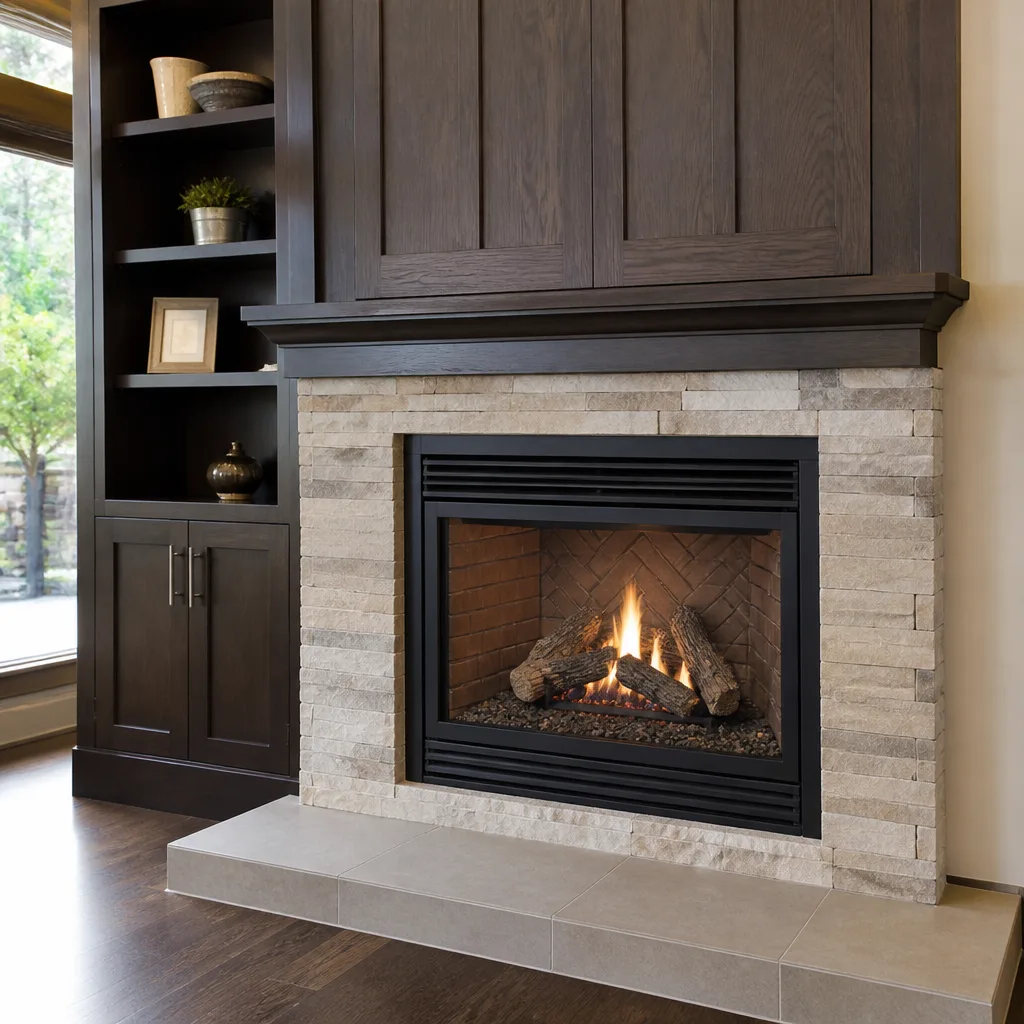 Gas fireplace service
Level 1 sweep and inspection to the NFPA 211 annual standard - flue, crown, cap, and flashing checked and photographed
Chimney sweep logs do not sweep chimneys. They loosen some creosote - which then falls where a brush and vacuum still have to collect it.
Chimney Cleaning Warning Signs: A Garland Homeowner’s Reference Guide
The warning signs that actually matter are rarely dramatic. A chimney that’s failing usually doesn’t roar, smoke, or announce itself. It leaves a white chalky stain on the brick. It lets a faint smoky smell drift into the living room on a mild afternoon. It makes the damper stick a little more each season. Most Garland homeowners see these things and file them under “cosmetic,” “house settling,” or “that’s just how old fireplaces behave.” Then a small, cheap fix turns into masonry work. The whole point of this guide is to connect the specific symptom you’re looking at to the specific failure it points to, so you can act while the fix is still small. We’ll walk through what each sign confirms, what it doesn’t, and when it’s time to have the system looked at.
Quick Answer
The warning signs that most often point to a real problem are white mineral staining on exterior brick, a smoky smell when the fireplace is off, a stiff or corroded damper, rust on the firebox interior, and unusual sounds from the flue. Each points to a specific failure: water infiltration, draft reversal, creosote off-gassing, a liner breach, or an obstruction. A professional camera inspection confirms which one you have. Acting on these early is almost always cheaper than waiting for the symptom to escalate.
Styles & brands we work with
- Sweep & inspection
- Caps & crowns
- Flue relining
- Masonry repair
- Gas fireplace service
Table of Contents
- White Stains on the Brick: What Efflorescence Confirms
- The Smoky Smell When the Fireplace Isn’t in Use
- The Damper Test: Stiff, Corroded, or Misaligned
- Rust Inside the Firebox: A Trailing Indicator
- Sounds From the Flue: Ticking, Dripping, Animals
- Creosote Buildup and What the Stages Mean
- Draft Problems Unique to Garland Homes
- How a Professional Inspection Works
White Stains on the Brick: What Efflorescence Confirms
Efflorescence is the chalky white or grey mineral residue you sometimes see running in trails down the outside of a chimney. It forms when water moves through the masonry, dissolves natural salts in the brick or mortar, and carries them to the surface, where they dry and leave a stain. Seeing it confirms one thing clearly: moisture is passing through the chimney structure. What it doesn’t tell you is where the water is entering. That’s the part only an inspection can answer.
Water gets into a chimney through a handful of ordinary paths. The most common are a failed crown at the top, cracked or missing mortar joints, an uncapped flue, or a flashing failure where the chimney meets the roof. Each of these lets water in at a different point, and each requires a different fix. Efflorescence on the lower half of the chimney often points to flashing or mortar, while staining near the top usually points to the crown or an open flue.
This matters in Garland because the region’s heavy spring and fall rains do a lot of the work. Our wet seasons deliver a lot of water in a short time, and a chimney that’s been leaking silently for a few years will show it as efflorescence long before the interior damage becomes obvious. The mineral trail is the chimney’s way of telling you water has been moving through the masonry for a while.
A proper look at efflorescence involves a few concrete steps:
- Check the crown at the top of the chimney for cracks or crumbling.
- Inspect flashing where the chimney meets the roof for gaps or lifted metal.
- Look at the mortar joints for soft or missing material.
- Confirm the flue has a proper cap.
If you find staining, don’t paint over it. Painting traps moisture and pushes the problem deeper into the brick. The fix is to find the water path, seal it, and let the chimney dry. Our chimney sweep visits in Garland often start with exactly this question, because the visual check is quick and it tells us where to look next.
The Smoky Smell When the Fireplace Isn’t in Use
A smoky odor in the room when there’s no fire is one of the most misinterpreted signs there is. Homeowners often assume the smell means the fireplace needs cleaning. Sometimes it does. But a persistent smell from an unused fireplace usually points to one of three things: draft reversal, creosote off-gassing, or a liner breach.
Draft reversal happens when outside air pressure pushes smoke and odor back down the flue into the house instead of up and out. It’s common on mild, humid days when the indoor and outdoor temperatures are close together. It’s also a sign that the flue may be too short, poorly sized, or affected by nearby trees or rooflines.
Creosote off-gassing is exactly what it sounds like. The creosote that’s accumulated in the flue releases a smoky smell into the house, especially when the weather is warm or humid. You might notice it more in the spring and fall than in the dead of winter, when a fire is burning regularly. Garland’s humid stretches make this smell more noticeable than you’d get in a drier climate.
A liner breach is the one to take most seriously. If the flue liner has cracked, smoke and gases have a path out of the flue and into the surrounding structure or back into the room. That’s a carbon monoxide concern as well as an odor issue. A camera inspection tells you which of these three you’re dealing with. If the smell is accompanied by a headache or dizziness when a fire is burning, stop using the fireplace and have it inspected first.
The Damper Test: Stiff, Corroded, or Misaligned
The damper is the metal plate above the firebox that opens and closes the flue. It’s a simple part, and that’s why it’s such a good early warning indicator. A damper that opens and closes smoothly and sits flush when closed is doing its job. A damper that’s stiff, noisy, corroded, or won’t seat properly is telling you something is happening above the smoke chamber, and that something is usually worth knowing about.
Here’s a quick test you can do yourself before a fire:
- With no fire burning and the firebox cold, open the damper fully. It should move without grinding or catching.
- Close it fully. It should seat flat with no visible gap around the edges.
- Look up past the damper with a flashlight. You should see a clear flue with no obvious obstruction.
If the damper grinds, catches, or won’t fully open, that stiffness usually points to rust or corrosion on the damper frame or hinge. Rust up there often means moisture has moved into the smoke chamber and the flue above it. If the damper doesn’t seat flat, the chimney can leak air and odor into the house year-round, and a fire won’t draft properly because the flue can’t be sealed off.
A misaligned damper can also mean the damper frame has warped, which happens after repeated exposure to moisture and heat. In older Garland homes, dampers are often a couple of decades old and have seen a lot of cycles. Replacing a damper is a small job, but it’s rarely the whole story. We look at the damper first because it’s fast to check and it often points to where the real problem is.
Rust Inside the Firebox: A Trailing Indicator
Rust on the inside of the firebox is what we call a trailing indicator. It doesn’t appear early. By the time you see rust, water has been entering the chimney long enough to reach the firebox steel, which means it’s also had time to reach the flue liner, the damper assembly, and the smoke chamber. Rust is a confirmation of a problem that’s already well along, not a first alert.
The distinction matters because homeowners often find rust and treat it as the starting point. They repaint the firebox, and the rust comes back in a season or two. The paint hides the symptom, not the cause. The cause is water moving through the masonry or the flue above, and it will keep moving until the entry point is found and sealed.
Inside the firebox, rust appears in three common patterns, and each points somewhere different:
- Rust around the damper frame: moisture has reached the smoke chamber, usually from a failure above.
- Rust on the firebox walls: water is moving through the brick behind the firebox, often via mortar joints.
- Rust on the firebox floor: water is pooling below the firebox, which usually points to a chimney base or foundation issue.
In Garland, the summer heat and occasional heavy rains combine to make rust show up faster than homeowners expect. A masonry chimney that’s been leaking a little each rainy season will show firebox rust within a few years. That’s your cue to have the whole system inspected, not just the firebox. Any repair we recommend starts with a camera inspection and a photo report you can see for yourself, so you’re never taking a rust diagnosis on faith.
Sounds From the Flue: Ticking, Dripping, Animals
Sounds from the flue are one of the easiest warning signs to dismiss, because they often happen when you’re not near the fireplace. But each specific sound points to a specific follow-up. Here’s how to read them:
- Ticking or tapping: usually a loose damper, a metal component expanding and contracting with temperature, or a small piece of debris shifting in the flue. A one-time tick is fine. A repeating tick when no fire is burning is worth a look.
- Dripping or a soft hiss: often water entering the flue and reaching a hot or warm surface. Water in the flue points to a cap, crown, or flashing failure above.
- Scratching or rustling: almost always an animal. Birds, squirrels, and raccoons can get into an open flue. This one warrants a call promptly, since an obstructed flue is a fire and carbon monoxide hazard.
- Whistling or howling on windy days: usually a draft or cap issue, sometimes a sign the flue is poorly sized or the cap is missing.
Birds are common in Garland, especially in spring when they’re looking for a place to nest. An open or uncapped flue looks like a perfect chimney to them. If you hear scratching in the flue, don’t light a fire. The obstruction can push smoke and carbon monoxide back into the room, and the animal’s nest material is combustible. Have the flue inspected and cleared before you use the fireplace again.
The other sounds usually warrant less urgency but still deserve a look. A dripping sound in the flue is a water problem that’s already reached the interior, which means the exterior entry point has been open for a while. A repeating tick or whistle is often a damper or cap issue that’s easy to fix if you address it early.
Creosote Buildup and What the Stages Mean
Creosote is the residue left behind when wood burns. It’s the main reason chimneys need sweeping, and it’s the fuel for most chimney fires. Creosote builds in three recognizable stages, and each stage tells you how urgent a cleaning is.
- Stage 1: a light, flaky, soot-like deposit. This is what a routine sweep removes. It’s not immediately dangerous, but it’s the layer that newer deposits build on.
- Stage 2: a harder, crustier deposit, often dark and shiny. This is the stage where a brush sweep starts to struggle, because the deposit clings to the flue walls. It’s the layer most often found in a chimney that’s been used regularly for a few years without cleaning.
- Stage 3: a glazed, tar-like deposit. This is the dangerous one. It’s highly combustible, and it can ignite during a hot fire. A Stage 3 flue needs professional attention before anyone burns another fire in it.
Most Garland homeowners never see the inside of their flue, so the only way to know which stage you’re at is to have it inspected. A camera inspection shows exactly where the creosote sits, how thick it is, and whether it’s reached the glazed stage.
Creosote buildup is also a clue to how you’re burning. Wet wood, slow-burning fires, and a cold flue all increase creosote. Burning seasoned wood and giving the fire enough air reduces it. If your flue is showing Stage 2 or higher, your burning habits may be a factor, and a sweep can tell you what to adjust.
For what it’s worth, in our experience across Garland, Stage 3 creosote is the single most serious issue we find in chimneys that haven’t been looked at in a few years. It’s also the one that’s easiest to prevent with regular sweeping.
Draft Problems Unique to Garland Homes
Draft is the flow of air up the chimney. When it works, smoke goes out the top. When it doesn’t, smoke comes into the room, and the chimney can’t do its job. Draft problems in Garland homes show up in a few specific ways.
The first is warm-weather smoking. On a mild spring or fall day, the temperature inside the flue is close to the temperature outside. There’s no pressure difference to push smoke up, so it drifts into the room. This isn’t usually a structural problem, but it can make a chimney feel like it’s failing when it isn’t. The fix is often to warm the flue briefly before lighting a fire.
The second is smoke returning after a fire has been burning a while. That’s a sign of a flue obstruction, a closed or stuck damper, or a liner problem. Smoke that comes back mid-fire is worth a professional inspection, especially if it comes with a smoky smell in the room.
The third is draft reversal caused by nearby construction or landscaping. A new roofline, a tall tree, or a nearby building can change the air pressure around your chimney and cause the flue to draw unevenly. This is more common in Garland’s tighter neighborhoods, where homes sit close together and trees grow tall. If the smoke problem started after a new tree went in, the tree is worth looking at.
One more local factor: many older Garland homes were built with a single central chimney serving both the fireplace and a furnace flue. When one appliance is replaced or removed, the shared flue can draft poorly because the balance has changed. A camera inspection shows whether both flues are pulling properly.
How a Professional Inspection Works
A professional inspection is not a walk-by. It’s a specific process, and you’re entitled to see what the technician sees. Here’s how it usually goes:
- Exterior check: the crown, flashing, mortar joints, and chimney cap.
- Firebox and damper: visual check of rust, cracks, and damper operation.
- Camera inspection of the flue: a camera goes up the flue and shows the liner, creosote level, and any obstructions.
- Photo report: what the camera found, shown to you, and explained in plain terms.
- Written findings and options: what needs fixing now, what can safely wait, and what the fix involves.
The most important thing to ask during an inspection is whether you can see the camera feed. At Dayspring Chimney Sweep, nothing is recommended without camera evidence you can see for yourself. That’s the difference between an inspection and a sales pitch.
Our team covers both the chimney flue and the dryer exhaust in one visit, since dryer vent cleaning is the other fire hazard that’s easy to overlook. We carry professional-trade materials like DuraFlex liners and Olympia Chimney components, so when a repair does turn up, we can fix it in-house rather than hand it off. We’ve been serving Garland since 2016, and the point of every visit is the same: bring the system back to safe operating condition, or tell you plainly that it’s fine and can wait.
Common Mistakes to Avoid
- Treating efflorescence as a cosmetic issue. Painting over white brick staining traps moisture and pushes the problem deeper into the masonry. The fix is finding and sealing the water path, not hiding the stain.
- Assuming a smoky smell means the chimney just needs sweeping. The smell could mean draft reversal, creosote off-gassing, or a liner breach, and each has a different fix. An inspection confirms which one you have before anything gets cleaned.
- Repainting a rusted firebox without finding the water source. Rust is a trailing indicator. If the water entry point isn’t sealed, the rust returns in a season or two.
- Lighting a fire after hearing scratching in the flue. An animal nest or bird can obstruct the flue and push smoke and carbon monoxide into the room. Have the flue cleared first.
- Skipping the camera inspection because the chimney “looks fine” from the outside. Creosote and liner cracks aren’t visible from the lawn. The camera is the only way to see inside the flue.
- Waiting for a dramatic sign. Chimney failures don’t usually announce themselves. Small, easy-to-dismiss details are the ones that point to real problems, and they’re cheapest to fix early.
- Burning wet or unseasoned wood to “get through the season.” Wet wood increases creosote buildup, which is the exact thing a sweep is trying to prevent. Seasoned wood is a small habit with a real effect.
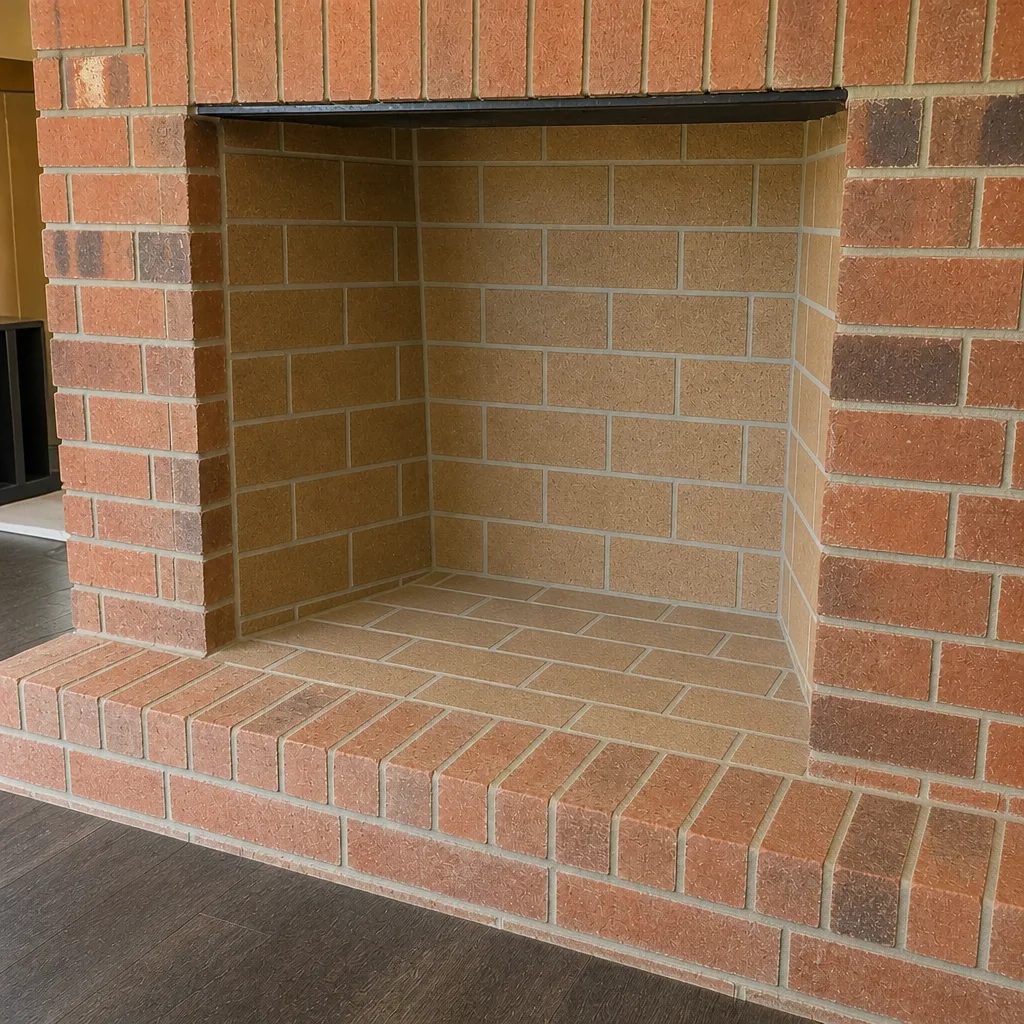
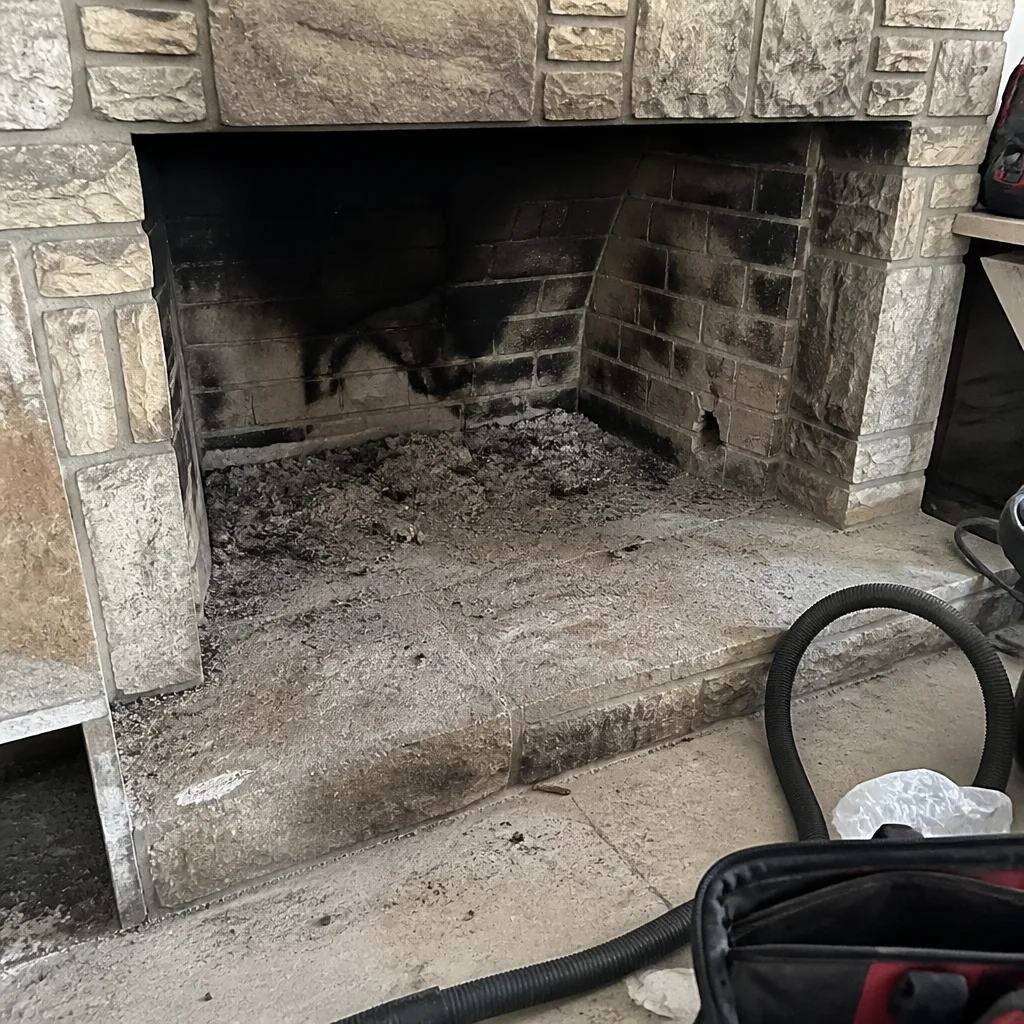
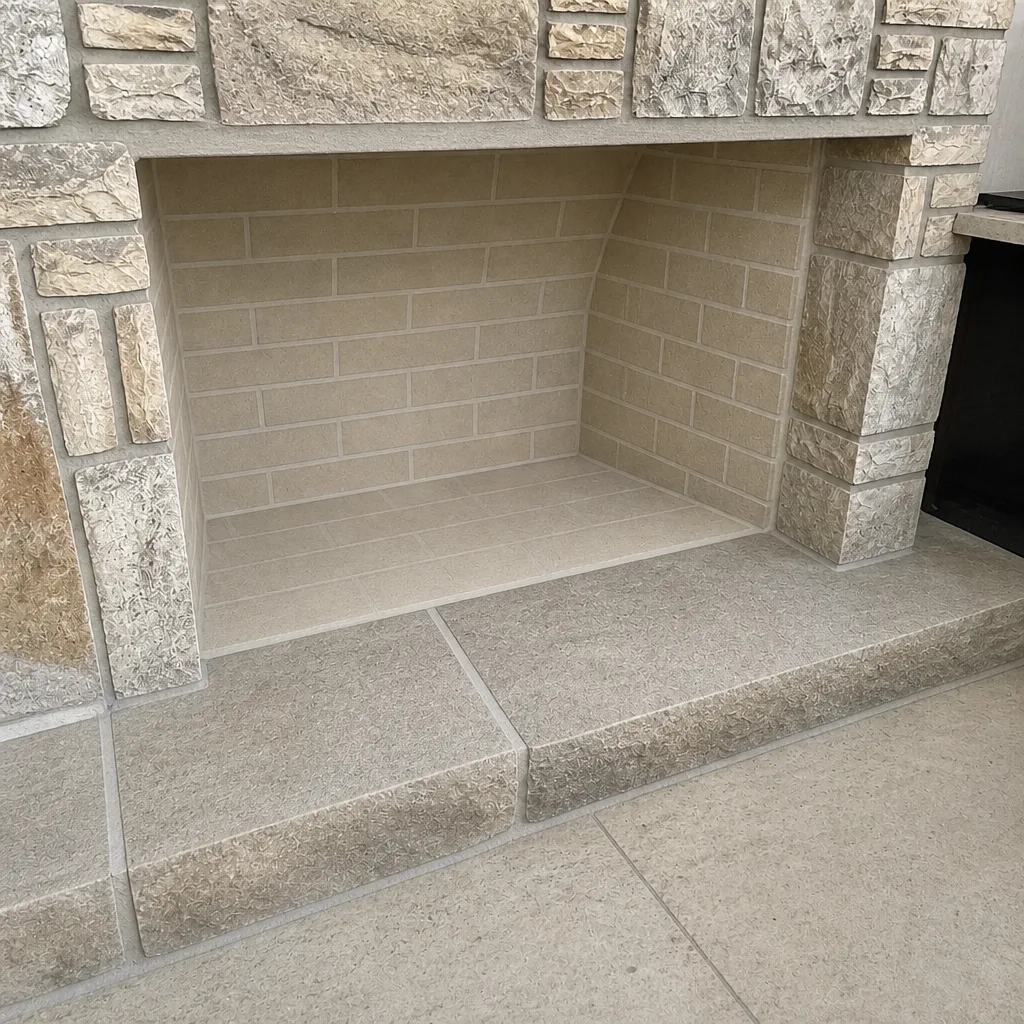
See the difference
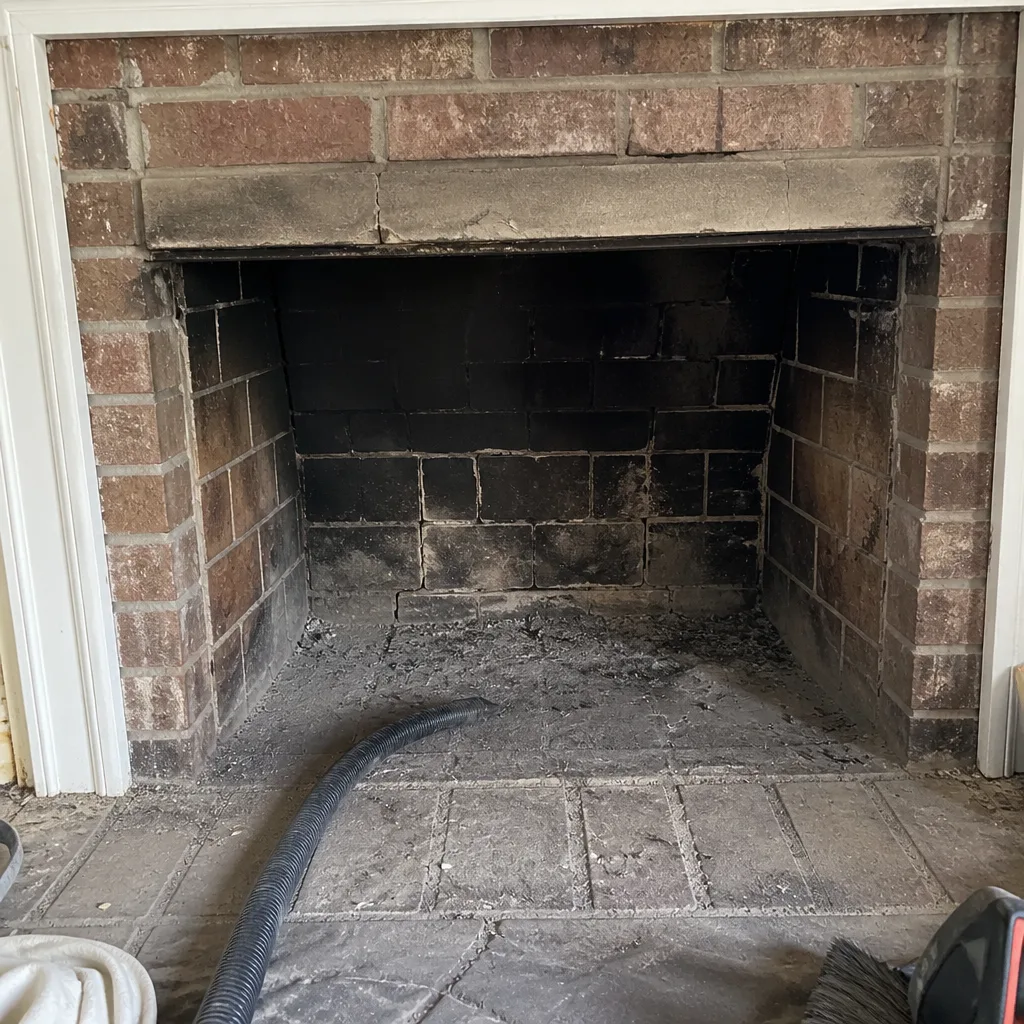 Before
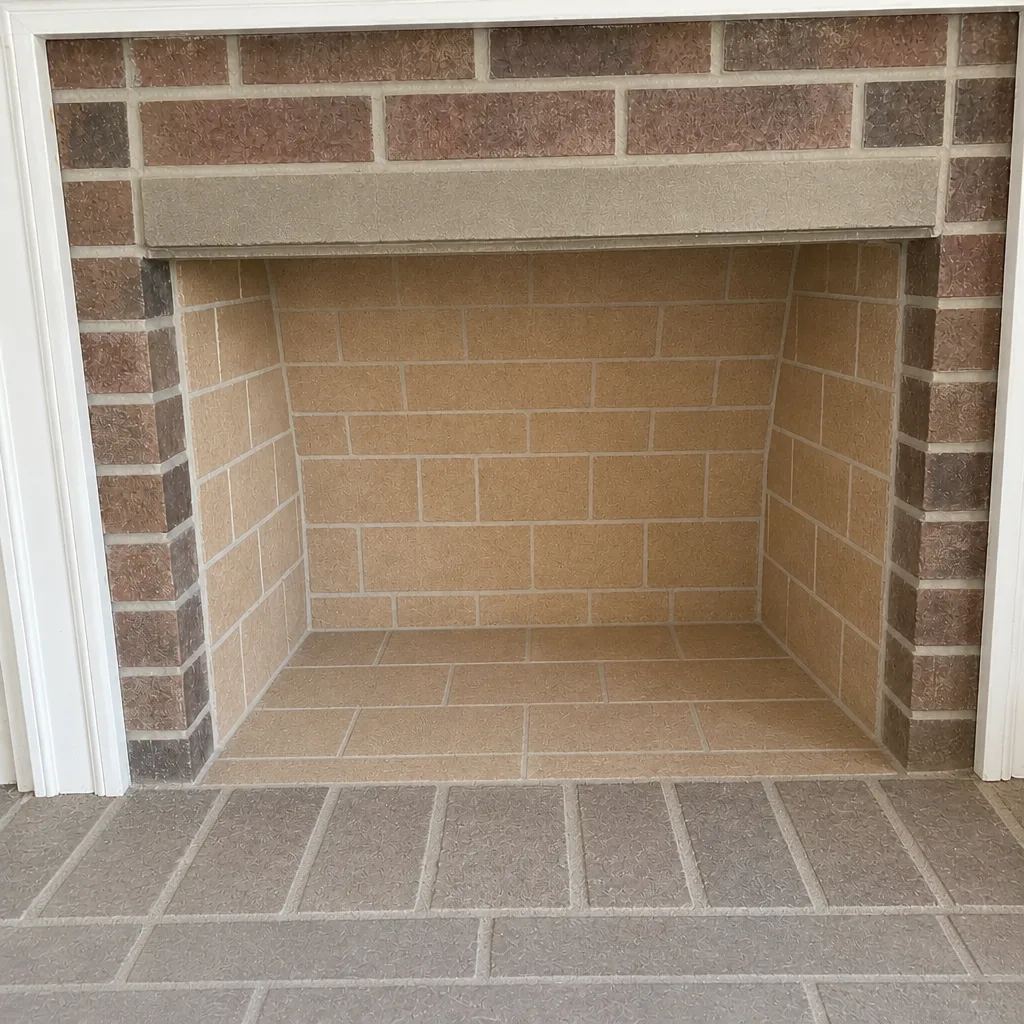 After
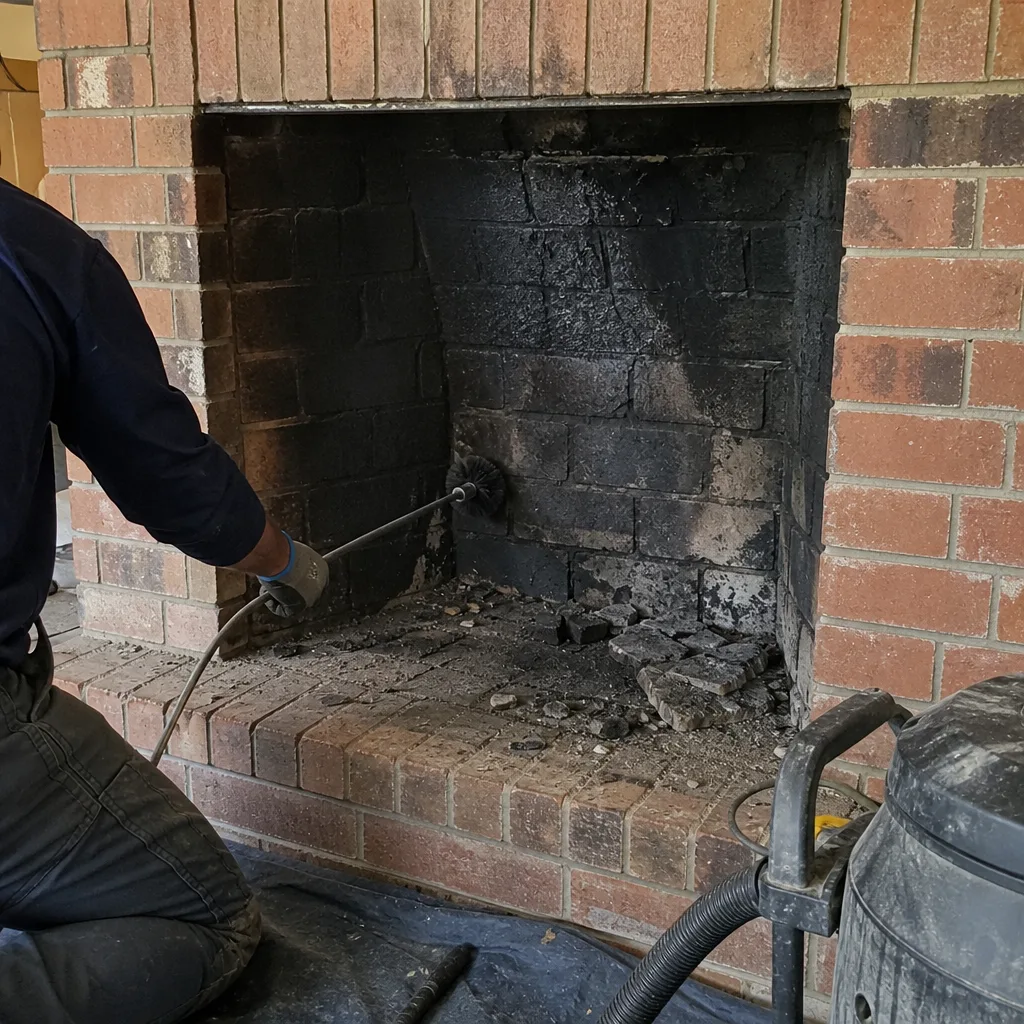 Before
 After
 Before
 After
When to Call a Professional
Call for an inspection if you see white efflorescence on the exterior brick, smell smoke when the fireplace is off, find rust inside the firebox, hear scratching or dripping in the flue, or notice the damper sticking. Call promptly if smoke comes back into the room while a fire is burning, or if you or anyone in the home gets a headache or dizziness when the fireplace is in use. These were the signs that drove most of our service calls in Garland, and each one is worth a look before it becomes a larger repair. Dayspring Chimney Sweep offers free estimates in Garland. Call (855) 974-6812. We answer 24/7. Fast dispatch from 7am to 7pm, Sunday through Friday.
Frequently Asked Questions
The most common are white mineral staining on exterior brick, a smoky smell when the fireplace is off, a stiff or corroded damper, rust inside the firebox, and unusual sounds from the flue. Each points to a specific issue, and a camera inspection confirms which one you’re dealing with. Call (855) 974-6812 for a free estimate if you’re seeing any of these.
It means water is moving through the masonry. That’s a confirmed problem, but it doesn’t tell you where the water is entering or how far it’s traveled. A professional inspection finds the entry point, typically the crown, flashing, mortar joints, or an uncapped flue. The fix is usually straightforward once the path is found.
It’s usually one of three things: draft reversal, creosote off-gassing, or a liner breach. Draft reversal is often weather-related and low-risk. Creosote off-gassing usually clears with a sweep. A liner breach is a safety concern and needs an inspection before the next fire. If you also feel dizzy or have headaches, stop using the fireplace and call (855) 974-6812.
Most homes that burn wood regularly should be inspected once a year and swept when the creosote reaches a meaningful level. If you burn often and haven’t had the flue looked at in a few years, a sweep is overdue. A camera inspection tells you exactly where you stand and whether a sweep is needed now or can wait until next season.
No. Paint hides the rust but doesn’t stop the water that caused it. The rust will usually return in a season or two because the entry point hasn’t been sealed. Find the water source first, then repair the firebox. A professional inspection finds the entry point and confirms whether the flue liner is also affected.
Don’t light a fire. An animal in the flue is an obstruction and a fire hazard, and it can push smoke and carbon monoxide into the room. Have the flue cleared and inspected before you use the fireplace again. In Garland, birds and squirrels are common in uncapped flues, especially in spring. Call (855) 974-6812 for help.
The Bottom Line
The chimney warning signs that matter most are the ones that look small: a white stain, a faint smell, a stiff damper, a bit of rust. Each of them points to a specific failure, and each is far cheaper to fix at the small stage than it is after the symptom escalates. If you take nothing else from this guide, take this: the camera inspection is what turns a guess into a fact, and any reputable sweep should be willing to show you what they see. In Garland, with its wet seasons and long warm stretches, chimneys don’t get much of a break, so a yearly look is a reasonable habit. If something in this guide rang a bell, that’s your cue to have it checked.
Call (855) 974-6812 for a free estimate. We answer 24/7. Fast dispatch from 7am to 7pm, Sunday through Friday. Closed Saturday. Dayspring Chimney Sweep handles sweeping, dryer vent cleaning, and chimney repair in-house, using professional-trade materials like DuraFlex, HeatShield, Gelco, Olympia Chimney, Famco, and Copperfield.
Written by the team at Dayspring Chimney Sweep, serving Garland since 2016.